Fire Damage Restoration & Remediation in Montgomery County, PA
24/7 emergency stabilization, water removal, smoke and soot cleanup, odor control, structural repairs, and coordinated recovery for homes and businesses.
24/7 emergency stabilization, water removal, smoke and soot cleanup, odor control, structural repairs, and coordinated recovery for homes and businesses.
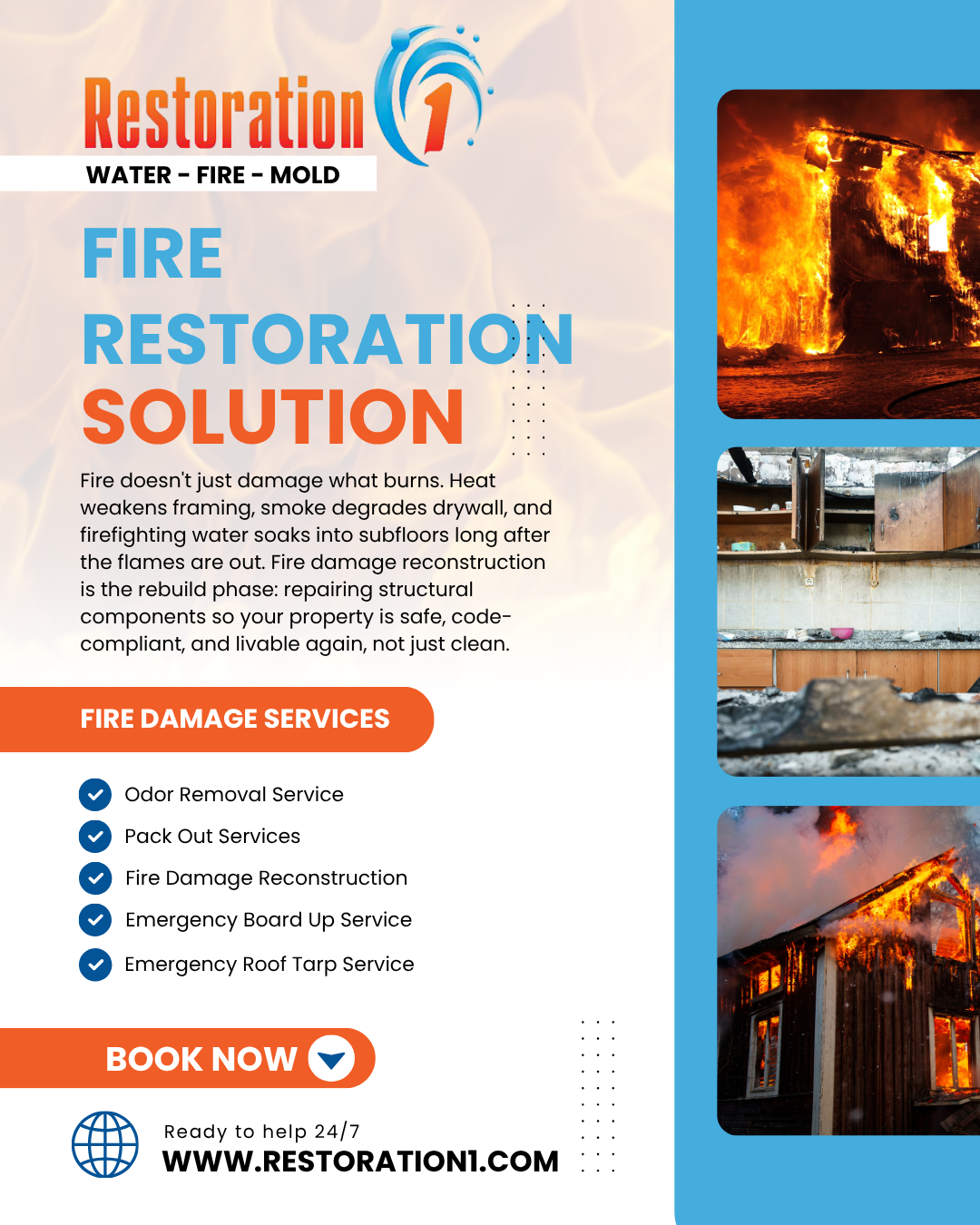
A fire can disrupt every part of a home or business. Even after the flames are extinguished, the property may contain smoke residue, soot, contaminated water, unstable materials, damaged utilities, and persistent odors that require a coordinated professional response.
Restoration 1 provides fire damage restoration in Montgomery County, PA, for residential and commercial properties. Our team responds to emergencies, evaluates visible and concealed damage, removes water, cleans smoke and soot, treats odors, and coordinates repairs or reconstruction as needed.
Throughout the process, we focus on safety, efficiency, documentation, and clear communication. Every recovery plan is tailored to the property, the type of fire, and the extent of the damage.
Water, soot, smoke residue, and exposed building materials can continue causing damage after the fire is out. Prompt stabilization and assessment may help reduce additional loss.
Fire damage does not follow a schedule. Restoration 1 provides emergency fire restoration in Montgomery County at any time, day or night. Early response allows the restoration team to secure the structure, address active water intrusion, and begin protecting unaffected areas.
Emergency assistance may include:
Do not enter a fire-damaged property until emergency personnel or qualified professionals confirm that it is safe to do so.
Fire recovery involves more than cleaning visible surfaces. Heat, smoke, soot, water, and firefighting materials can affect structural components, finishes, contents, electrical systems, HVAC equipment, insulation, and concealed spaces.
Restoration 1 provides comprehensive fire damage restoration in Montgomery County and Montgomeryville, including:
Temporary protection helps secure broken windows, damaged doors, roof openings, and other exposed areas.
Our team evaluates fire, smoke, soot, water, odor, and structural damage before developing the restoration plan.
Water used during firefighting or released by damaged plumbing must be removed to reduce secondary moisture damage.
Specialized cleaning methods are selected according to the type of residue, affected material, and fire conditions.
Air filtration, source removal, detailed cleaning, and deodorization help address persistent smoke odors.
Damaged finishes, framing, insulation, and building components may be repaired or reconstructed as part of the recovery process.
Each property requires an individual plan. Restoration 1 follows a structured process designed to address immediate hazards, visible damage, concealed contamination, and long-term repairs.
Smoke and soot can travel through wall cavities, ductwork, insulation, and adjoining rooms. Professional assessment helps identify affected areas that may not be obvious during an initial walkthrough.
Fire may leave a property exposed to rain, wind, debris, animals, or unauthorized entry. Emergency board-up and temporary stabilization help protect the structure while inspections, cleanup, and repairs are planned.
Stabilization may include:
The exact approach depends on the condition of the building and the instructions of fire officials, inspectors, property owners, and insurance representatives.
Firefighting efforts can leave substantial water inside the building. Damaged plumbing, sprinklers, weather exposure, and open roof areas may add to the moisture problem.
Water removal and drying may involve:
Prompt drying helps reduce swelling, staining, corrosion, odor, and microbial growth. Materials that cannot be cleaned or dried safely may require removal.
Smoke and soot residues vary according to the fuel source, temperature, ventilation, and materials involved in the fire. Dry soot, oily residue, protein-based smoke, and synthetic-material smoke may each require different cleaning methods.
Our smoke and soot remediation process may include:
Walls, ceilings, floors, framing, fixtures, and other affected surfaces are evaluated for appropriate cleaning or removal.
Furniture, household items, and business contents may be assessed for on-site cleaning, pack-out, specialty treatment, or disposal.
Air-scrubbing equipment with suitable filtration can help capture fine airborne particles during restoration work.
Ductwork, filters, air handlers, and connected equipment may require inspection when smoke has entered the ventilation system.
Cleaning products and techniques are matched to the affected material to avoid spreading or setting soot.
Persistent odors are addressed by removing contaminated materials and cleaning affected surfaces before deodorization.
Smoke odor may remain in porous materials even after visible soot is removed. Carpeting, upholstery, insulation, drywall, wood, clothing, and HVAC components can absorb odor compounds.
Odor remediation may include:
Deodorization should not simply cover smoke with fragrance. Effective treatment focuses on removing or neutralizing the source of the odor.
Some fires damage only finishes and contents. Others affect framing, roofing, drywall, insulation, flooring, windows, electrical systems, plumbing, or mechanical equipment.
Restoration 1 can coordinate repairs and reconstruction that may include:
The objective is to restore the property as safely and efficiently as possible while following the approved project scope.
Residential fires can displace families, damage personal belongings, and interrupt essential routines. Restoration 1 helps homeowners understand each stage of the recovery process and the work required before the home can be safely occupied.
Residential services may include:
Personal items are evaluated individually because some materials can be cleaned successfully while others may not be safe or practical to restore.
A commercial fire can affect employees, customers, tenants, inventory, records, equipment, and business operations. Fast stabilization and organized documentation can help reduce downtime and support recovery planning.
Commercial restoration may address:
Restoration 1 works with owners, managers, insurers, and other project stakeholders to keep the recovery process organized.
Selecting the right fire restoration company can affect the speed, organization, and outcome of the recovery process. Restoration 1 provides emergency fire restoration throughout Montgomery County with a focus on professional service and consistent communication.
After emergency responders have left, property owners should take precautions before beginning cleanup.
Improper cleaning can spread soot, permanently stain surfaces, or push residue deeper into porous materials.
Restoration 1 provides fire damage restoration throughout Montgomery County, including Montgomeryville and nearby communities. Our team assists both residential and commercial property owners with emergency stabilization, cleanup, remediation, and reconstruction.
Managing the process through one restoration provider can reduce the need to coordinate numerous separate contractors for water removal, smoke cleanup, odor control, and structural repairs.
Working with experienced disaster restoration professionals can make the recovery process more organized after a fire. Restoration 1 is available for emergency fire restoration, smoke and soot cleanup, water removal, odor treatment, and structural recovery throughout Montgomery County.
Contact Restoration 1 to request emergency assistance, schedule an assessment, or arrange a fire damage restoration consultation.
Request Fire Restoration Service
Portfolio writing sample prepared for demonstration purposes.