16x20x5 Air Filter Guide: Systems, MERV Ratings, Replacement, and Installation
A practical guide to choosing a compact whole-house filter that balances particle capture, airflow, maintenance, and system compatibility.
A practical guide to choosing a compact whole-house filter that balances particle capture, airflow, maintenance, and system compatibility.
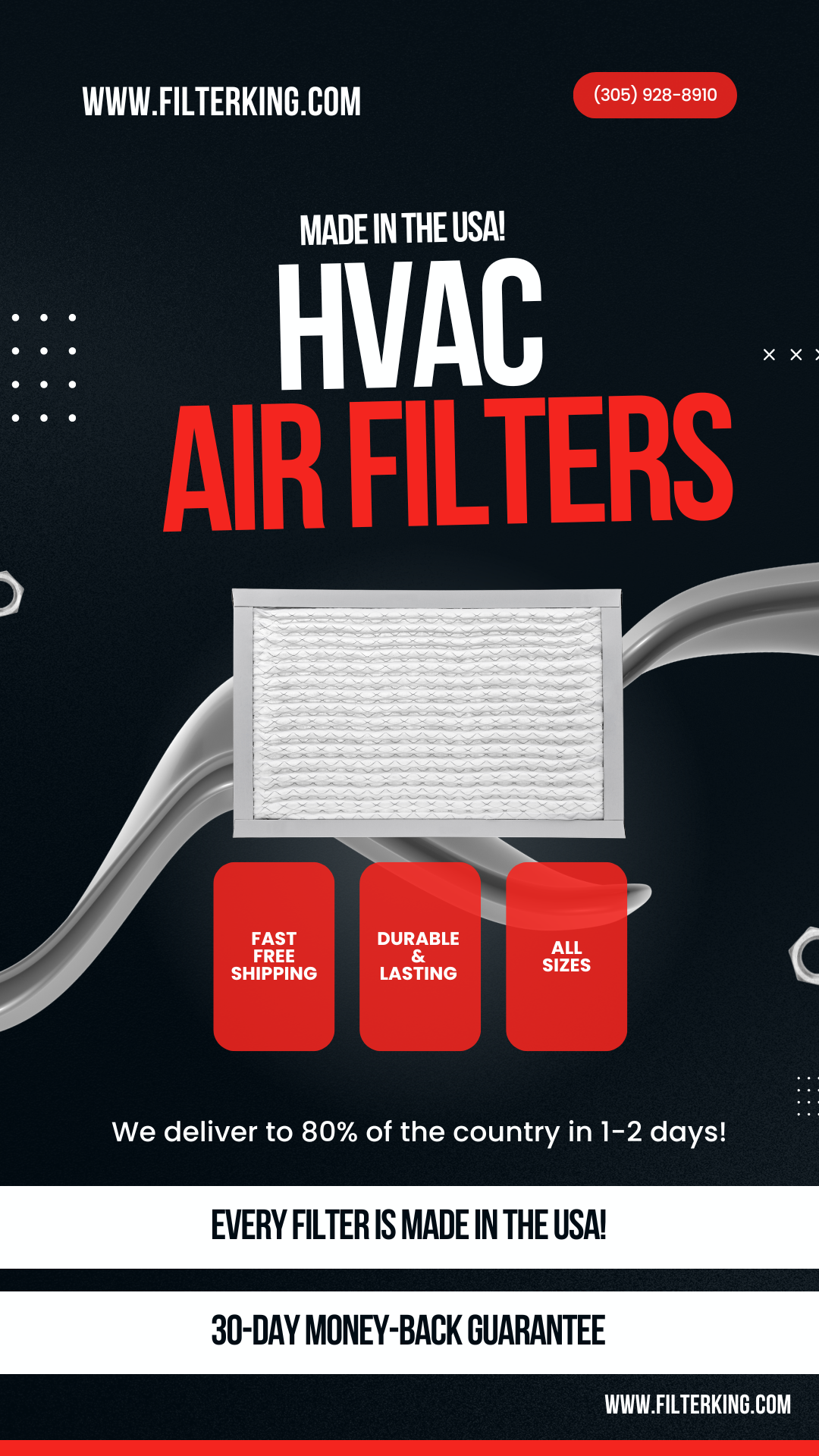
A 16x20x5 air filter is a compact, high-capacity filter designed for a whole-house media cabinet on the return side of a furnace or air handler. Its deeper pleat pack provides substantially more filter media than a standard 1-inch filter, helping it hold more dust while supporting steadier airflow between replacements.
For homes that need stronger filtration but have limited space around the HVAC system, the 16x20x5 format can be a practical upgrade. However, the filter must match the cabinet, airflow requirements, and equipment specifications. A filter that is too large, too restrictive, or poorly sealed may reduce performance rather than improve it.
This guide explains which HVAC systems use 16x20x5 filters, how deeper filters perform, which MERV rating may suit your household, how often to replace the filter, and how to install it correctly.
Confirm both the nominal size and the actual dimensions printed on your current filter. A filter labeled 16x20x5 may have slightly different actual measurements depending on the brand and media cabinet.
A 16x20x5 filter is typically installed in a dedicated whole-house media cabinet rather than a standard 1-inch return grille or filter slot. The cabinet is usually mounted on the return side of a gas furnace or air handler so air passes through the filter before reaching the blower and indoor coil.
Compatible cabinets may be associated with equipment or filtration products from Honeywell, Aprilaire, Carrier, Bryant, Trane, American Standard, Lennox, and other HVAC manufacturers. Brand alone does not confirm fit. The cabinet model and printed filter dimensions matter more than the name on the furnace.
A 16x20x1 rack is not designed to hold a 16x20x5 filter. Converting to a deeper filter normally requires a compatible media cabinet and, in some installations, professional duct or return-plenum modifications.
The primary advantage of a 5-inch filter is not simply its thickness. The deeper frame allows manufacturers to create a larger pleated surface area inside the same 16-by-20-inch face. More media gives airborne particles more opportunities to contact the filter while spreading airflow across a broader surface.
Compared with a 1-inch filter of the same face size and similar efficiency, a properly designed 5-inch filter may offer:
These benefits depend on the filter's construction, pleat density, MERV rating, fit, and condition. A clogged deep filter can still restrict airflow. Filter depth does not eliminate the need for routine inspection.
MERV, or Minimum Efficiency Reporting Value, describes how effectively a filter captures particles within specified size ranges. A higher number generally indicates stronger particle capture, but it may also create more airflow resistance. The best choice is the highest efficiency your system can support while maintaining proper airflow.
| MERV Option | Best For | Primary Benefits | Considerations |
|---|---|---|---|
| MERV 8 | General household filtration | Captures common dust, lint, and larger airborne particles while typically supporting strong airflow. | A practical starting point for systems that do not require enhanced fine-particle filtration. |
| MERV 11 | Homes with pets, moderate allergy concerns, or urban dust | Improves capture of smaller particles, including more pet dander and fine household debris. | Confirm that the blower and return system can accommodate the added resistance. |
| MERV 13 | Households seeking stronger fine-particle capture | Captures a higher percentage of smaller airborne particles when the filter fits and the system is properly designed. | Not every residential system can support MERV 13. Verify compatibility before upgrading. |
| MERV 8 Carbon | Homes with recurring cooking, pet, or smoke odors | Combines general particle filtration with activated carbon intended to adsorb some common household odors. | Carbon capacity is finite. It does not replace source control or ventilation. |
MERV ratings apply to particle capture. Standard pleated filters are not designed to remove gases or volatile organic compounds simply because they have a higher MERV rating. A carbon-enhanced filter can help reduce certain odors and some gaseous contaminants, but performance depends on the amount and quality of activated carbon, contact time, and contaminant concentration.
For smoke, strong chemical odors, or persistent indoor-air concerns, combine filtration with source removal, ventilation, and appropriate professional evaluation.
The compact 16x20 face size and deep media pack make this filter useful in several residential settings:
A deeper filter is not automatically the correct choice for every home. Equipment condition, blower capacity, duct sizing, return-air configuration, humidity, occupant needs, and local outdoor-air conditions should all influence the final selection.
A deep-pleated filter may reduce the number of scheduled changes each year. Many 5-inch filters last several months, though actual life depends on runtime, particle load, pets, smoke, renovation dust, and other environmental factors.
Pet hair often settles before it reaches the filter, but dander and finer debris can remain airborne. A MERV 11 filter may provide a useful balance between enhanced capture and airflow in many compatible systems. Regular vacuuming and pet-grooming routines remain important.
A compatible MERV 11 or MERV 13 filter can capture more pollen and other fine particles than a lower-efficiency filter. Filtration may support an overall indoor-air strategy, but it is not a medical treatment. Keep windows closed during high-pollen periods, address air leaks, and consult an HVAC professional before increasing filter resistance.
Homes near traffic, construction, or other outdoor particle sources may benefit from enhanced filtration. MERV 11 or MERV 13 may be appropriate when the system supports it and the home has adequate return airflow.
Longer-lasting filters may reduce the number of discarded frames and filter changes. The environmental benefit varies by product materials, packaging, shipping, HVAC efficiency, and replacement habits, so filters should still be changed when loaded rather than kept in service solely to reduce waste.
Consider a 1,600-square-foot townhouse with one pet, a compatible whole-house media cabinet, and recurring dust concerns. The residents have been replacing a 1-inch filter monthly, yet dust accumulates quickly and the filter rack does not seal well.
After a qualified HVAC technician confirms that the return system can support a properly sized 16x20x5 cabinet and an appropriate MERV rating, the household may notice several practical improvements:
This example is not a guarantee of energy savings, symptom relief, or noise reduction. Results vary based on equipment, ductwork, filter selection, installation quality, and conditions inside the home.
Many households replace a 16x20x5 filter every 6 to 12 months. Homes with heavy HVAC use, multiple pets, smoking, renovation dust, nearby construction, wildfire smoke, or high outdoor pollution may need replacement every 3 to 6 months.
Do not rely on the calendar alone. Inspect the filter periodically, especially during heating and cooling peaks.
Replacing a dirty filter is one of the simplest forms of HVAC maintenance. A clean, correctly sized filter helps protect airflow, the blower, and the indoor coil.
Calendar reminders, multi-pack purchases, and filter-delivery subscriptions can help prevent missed changes. FilterKing offers one-time purchases and recurring delivery options for households that want replacement filters available before peak heating or cooling seasons.
If the cabinet is damaged, the filter does not slide in smoothly, airflow appears weak, or the system produces unusual noise after installation, turn the system off and contact a qualified HVAC professional.
A reliable deep-pleated filter should fit the cabinet consistently and remain structurally stable throughout its service life. Important quality indicators include:
FilterKing designs its 16x20x5 filters for compact whole-house cabinets, with rigid frames, stable pleats, and options for one-time, multi-pack, or subscription purchases. Before ordering, compare the actual dimensions with the filter currently installed in your cabinet.
Check the cabinet label, current filter frame, and actual dimensions. Never assume every filter labeled 16x20x5 is interchangeable.
Consider pets, allergy concerns, outdoor particle levels, cooking odors, smoking, renovation activity, and how frequently you are willing to inspect and replace the filter.
MERV 8 is a practical general-purpose option. MERV 11 may suit homes with pets or moderate fine-particle concerns. MERV 13 offers stronger fine-particle capture when the HVAC system can support it. A carbon-enhanced option may help with recurring household odors.
Review the furnace or air-handler documentation and consult an HVAC professional when moving to a higher MERV rating. Comfort complaints, coil freezing, overheating, or weak airflow should never be ignored.
Start with the manufacturer's recommended interval, then adjust based on visual inspection, household conditions, and system performance. A subscription or multi-pack can reduce the chance of operating with an overdue filter.
It can perform very well in a system designed for that size. Overall performance depends on MERV rating, pleat design, media area, cabinet sealing, airflow, and replacement timing. A larger face-size filter may offer more media area, but the correct filter is the one engineered for your cabinet and system.
No. A 5-inch filter requires a cabinet designed for its depth. Do not bend, trim, crush, or force a deep filter into a 1-inch rack. An HVAC professional can determine whether a compatible media cabinet can be installed without compromising return airflow.
Actual dimensions vary by manufacturer and cabinet. One common actual size is approximately 15.5 by 19.5 by 4.75 inches, but that measurement is not universal. Match the actual dimensions and model information printed on the existing filter before ordering.
Many homes replace deep filters every 6 to 12 months. Heavy use, pets, smoke, construction dust, or outdoor pollution may shorten the interval to 3 to 6 months. Inspect the filter throughout the year rather than relying only on a fixed date.
A properly selected deep filter may support steadier airflow and reduce strain associated with a heavily loaded or overly restrictive 1-inch filter. However, HVAC noise can also come from duct sizing, blower settings, loose panels, bearings, or other mechanical problems. A filter change will not correct every noise issue.
Availability varies. Some retailers stock common deep-filter sizes, while others carry only a limited selection. Specialty suppliers and online filter companies often provide more MERV options, exact-size information, multi-packs, and recurring delivery.
A compatible MERV 11 or MERV 13 filter can capture more pollen and other fine airborne particles than a lower-efficiency filter. Results depend on system runtime, cabinet sealing, outdoor-air entry, cleaning practices, and the specific allergen. Filtration should be part of a broader indoor-air strategy.
A standard pleated filter primarily captures particles and is not designed to eliminate gases or odors. A carbon-enhanced filter may reduce some cooking, pet, or smoke odors, but source control and kitchen ventilation remain essential.
A 16x20x5 air filter can provide high dust capacity, longer service intervals, and strong particle filtration in a compact whole-house cabinet. The key is matching the exact cabinet dimensions, selecting a MERV rating the HVAC system can support, installing the filter in the correct direction, and replacing it before excessive loading affects airflow.
FilterKing keeps multiple 16x20x5 filter options available for one-time orders, multi-pack purchases, and scheduled replacements. Compare the printed dimensions on your current filter before choosing your next replacement.
Portfolio writing sample prepared for demonstration purposes.